Free Trial Best Practices: Converting Users to Paying Customers
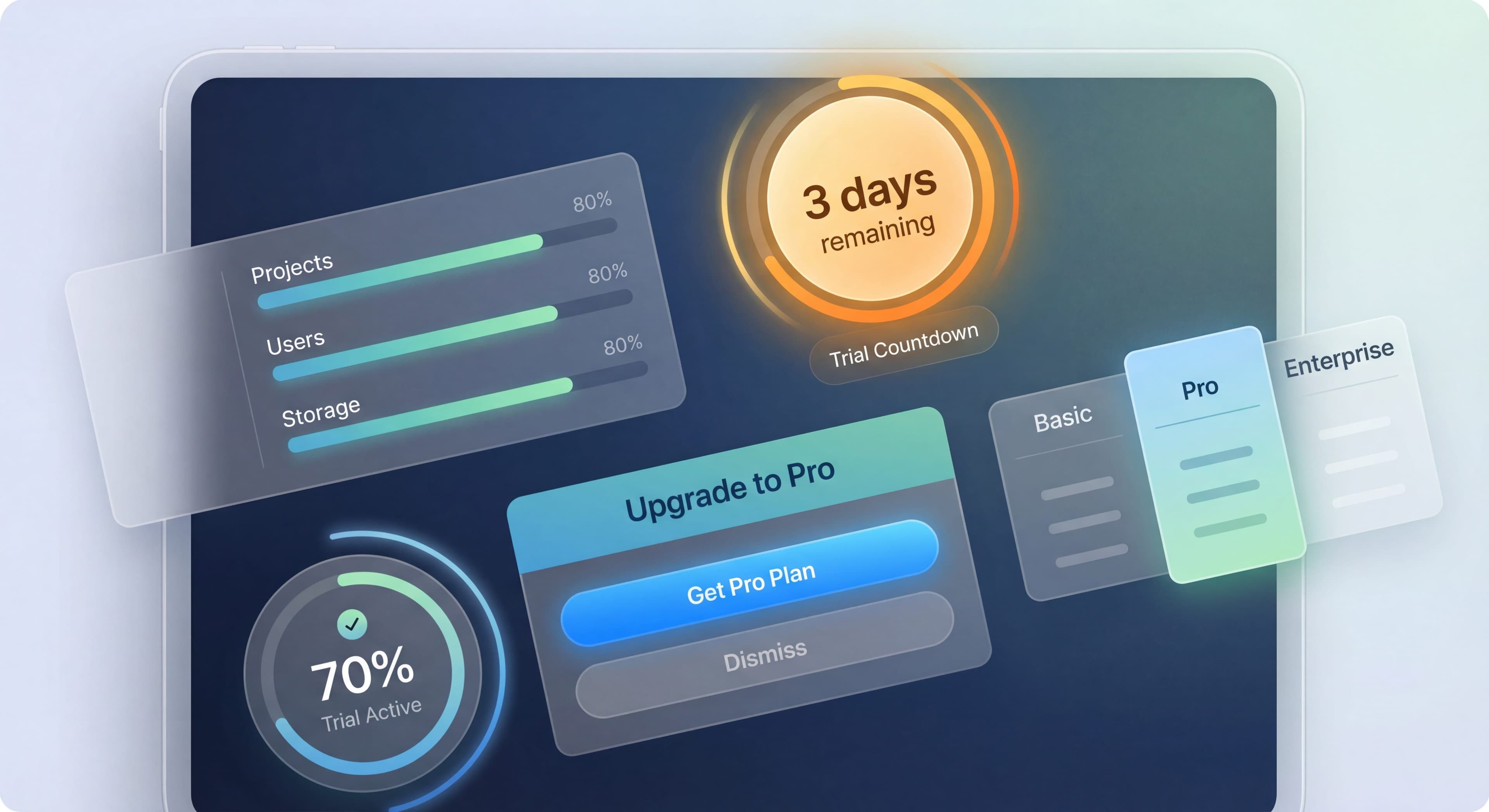

Free trials are the backbone of SaaS customer acquisition. They're how prospects experience value before paying. The median B2B SaaS trial-to-paid conversion rate is 18.5%, but there's huge variance. Top performers hit 35-45%, and the best companies reach 60% or higher. That spread tells you trial design really matters. Done well, with the right trial length, feature access, onboarding, and conversion mechanics, trials convert 25%+ of users and drive sustainable growth. Done poorly, they become expensive lead-gen tools that eat support resources, bloat your database, and never return the acquisition investment.
This guide covers how to design and optimize free trials that convert. Recent data shows the biggest differentiators are 60%+ activation rates, time-to-first-value under 10 minutes, and behavioral conversion triggers rather than just calendar-based prompts.
Trial users not converting?
Create step-by-step guides that accelerate time-to-value and help users experience your product's benefits before trial ends with Glitter AI.
Trial Models
Opt-In vs. Opt-Out Trials
The fundamental choice in trial design: do you require a credit card upfront? This decision affects conversion rates, user experience, and trial quality.
Opt-in trials don't require a credit card. Users experience the product risk-free and only pay when they decide to convert. This lowers signup friction dramatically, making it easier to build a big top-of-funnel. Users feel in control, not pressured, and don't worry about forgetting to cancel. The tradeoff: conversion rates usually land between 10-25%, much lower than opt-out trials. Without payment info on file, there's a psychological barrier to converting when trial ends. You also get more "free-riders" who never intended to pay. Revenue is delayed until users actively convert, which affects cash flow.
Opt-out trials require credit card upfront and charge automatically if users don't cancel before expiration. Conversion rates hit 30-50%, sometimes 60%+, because the default action is payment. Users who give credit card info are more qualified leads with real purchase intent. Revenue recognition starts earlier, improving cash flow. But the credit card requirement creates signup friction and fewer trial starts. Some users see it as pushy or manipulative. Churn in the first months tends to be higher as users who didn't actively choose to pay reconsider. Auto-charging also has regulatory considerations depending on jurisdiction.
Hybrid approaches make credit card optional but incentivize providing it with extended trials, extra features, or priority support. This segments your trial population by purchase intent while still letting in users who won't give payment info upfront. How well it works depends on how attractive the incentives are and how clearly you communicate the value exchange.
Trial Length Considerations
7-Day Trials:
- Best for: Simple products with quick TTV
- Pros: Urgency, faster sales cycles
- Cons: May not allow full evaluation
14-Day Trials:
- Best for: Most SaaS products
- Pros: Balance of urgency and evaluation time
- Industry standard for good reason
30-Day Trials:
- Best for: Complex B2B products
- Pros: Adequate evaluation for enterprise
- Cons: Lost urgency, forgotten trials
Custom/Extended:
Strategic extensions for enterprise or special cases.
How to Choose Trial Length
Factors:
- Time to Value (TTV): How long until users experience value?
- Decision complexity: How many stakeholders?
- Switching costs: What are they evaluating against?
- Sales cycle: Self-serve or sales-assisted?
Rule of Thumb:
Trial length = 2x Time to Value (minimum)
If TTV is 3 days, trial should be at least 7 days.
Feature Access Strategies
Full Access Trials
All features available during trial.
Pros:
- Users experience complete value
- No artificial limitations frustrate users
- Demonstrates product confidence
Cons:
- Users may not explore fully
- No upgrade motivation during trial
- Harder to segment interest
Best For:
- Products where value requires full access
- Enterprise trials
- Simple products without tiers
Limited Feature Trials
Premium features gated, basic features available.
Pros:
- Creates upgrade motivation
- Signals value of paid tiers
- Encourages exploration of paid features
Cons:
- May frustrate users
- Incomplete value experience
- Complicates onboarding
Best For:
- Products with clear premium/basic divide
- Multi-tier pricing models
- Features that clearly demonstrate upgrade value
Usage-Limited Trials
Full features, limited quantity (users, records, actions).
Pros:
- Full feature experience
- Natural upgrade trigger
- Clear value proposition
Cons:
- Artificial feeling
- May hit limits before value demonstrated
- Requires careful limit setting
Best For:
- Products that scale with usage
- Team-based pricing models
- Products where more = more value
Conversion Triggers
Natural Conversion Moments
Hit Usage Limit:
"You've used all 5 projects. Upgrade to create more."
Team Growth:
"Invite more than 3 teammates with our Team plan."
Need Advanced Feature:
"Advanced analytics are available on our Pro plan."
Success Milestone:
"Congratulations on your first 100 leads! Ready to scale?"
Time-Based Triggers
Mid-Trial Check-In (Day 7 of 14):
"You're halfway through your trial. Here's what you've accomplished..."
Pre-Expiration Warning (3 days before):
"Your trial ends in 3 days. Don't lose your work."
Day-Of Expiration:
"Your trial ends today. Upgrade now to keep access."
Post-Expiration Grace:
"Your trial expired but your data is safe. Upgrade to continue."
Behavioral Triggers
High Engagement:
"You're a power user! Unlock unlimited access with Pro."
Value Demonstrated:
"You've saved 10 hours this week. Keep the productivity going."
Integration Active:
"Your Slack integration is working great. Keep it connected with a paid plan."
Conversion UX Best Practices
In-App Upgrade Prompts
Timing:
- After value demonstrated, not before
- At natural pause points
- When upgrade is relevant
Design:
- Clear value proposition
- Easy action path
- Non-intrusive but visible
Copy:
- Focus on what they gain
- Acknowledge what they've achieved
- Make next step obvious
Pricing Page Optimization
During Trial:
- Show current usage against limits
- Highlight recommended plan
- Emphasize value received
Trial-to-Paid Transition:
- Pre-fill with trial selections
- One-click upgrade path
- Clear what happens next
Checkout Optimization
Reduce Friction:
- Minimal required fields
- Multiple payment options
- Annual discount visible
Build Trust:
- Security badges
- Money-back guarantee
- Support availability
End-of-Trial Experience
The Critical Moment
Trial expiration is make-or-break. Handle it with care.
Communication Sequence
Day -7: "One week left! Here's what you'll lose..."
Day -3: "3 days remaining. Questions? Let us help."
Day -1: "Tomorrow your trial ends. Last chance to..."
Day 0: "Your trial has ended. Upgrade now to restore access."
Day +1: "We've saved your work. It's waiting for you."
Day +3: "Don't let your progress disappear..."
Day +7: "Final reminder before data deletion" (if applicable)
Data Handling Options
Option 1: Hard Cutoff
- Access removed immediately
- Data preserved for X days
- Clean upgrade path
Option 2: Grace Period
- Limited access continues briefly
- Read-only mode
- Encourages completion
Option 3: Permanent Free Tier
- Downgrade to limited free
- Data preserved
- Ongoing upgrade opportunity
What to Preserve
Always preserve user data through the transition. Losing work makes people angry, not ready to convert.
Preserve:
- All created content
- User settings
- Integration configurations
- Collaboration history
Conversion Rate Benchmarks
Processes undocumented?
Create step-by-step SOPs that capture best practices in minutes with Glitter AI.
Industry Averages
Opt-In Trials:
- Average: 15-20%
- Good: 20-30%
- Excellent: 30%+
Opt-Out Trials:
- Average: 40-50%
- Good: 50-60%
- Excellent: 60%+
Factors Affecting Conversion
Higher Conversion:
- Quick TTV
- Strong onboarding
- Clear value demonstration
- Appropriate trial length
- Good urgency mechanics
Lower Conversion:
- Slow TTV
- Complex products
- Poor onboarding
- No conversion optimization
- Misaligned pricing
Measuring Trial Performance
Key Metrics
Trial Start Rate:
% of signups that begin trial
Trial Engagement:
Actions taken during trial
Conversion Rate:
% of trials that convert to paid
Time to Conversion:
How long before conversion decision
Conversion Path:
Which triggers drive conversions
Funnel Analysis
Track Each Stage:
- Signup → Trial Start
- Trial Start → First Value
- First Value → Engagement
- Engagement → Conversion Decision
- Decision → Payment Complete
Cohort Analysis
Compare conversion by:
- Trial start date
- Acquisition source
- User segment
- Plan type
- Trial length (if testing)
Processes undocumented?
Create step-by-step SOPs that capture best practices in minutes with Glitter AI.
Testing and Optimization
What to Test
Trial Length:
7 vs 14 vs 21 days
Feature Access:
Full vs limited vs usage-limited
Conversion Prompts:
Timing, copy, design
End-of-Trial Experience:
Hard cutoff vs grace period
Pricing Display:
When and how to show pricing
Testing Methodology
- Hypothesis: "14-day trials will convert better than 7-day"
- Segment: Split traffic 50/50
- Duration: Run until statistically significant
- Analysis: Compare conversion rates
- Decision: Implement winner
Continuous Improvement
Trial optimization is never "done":
- Regular conversion reviews
- Ongoing A/B tests
- User feedback integration
- Competitive monitoring
Common Trial Mistakes
Too Long/Too Short
Too Long: Urgency fades, users forget, no pressure to decide
Too Short: Not enough time to evaluate, users get frustrated
Unclear Value Proposition
Users don't understand what they get or why they should pay.
Weak Onboarding
Users don't reach value during the trial, so they don't convert.
Aggressive Conversion Tactics
Pushing for conversion before users see value creates resentment.
Poor End-of-Trial
Abrupt cutoffs without warning or data preservation destroy goodwill.
One-Size-Fits-All
Same trial experience for everyone, regardless of segment or behavior.
Free Trial Action Plan
Audit Current Trial
- What's the conversion rate?
- Where do users drop off?
- How long do converters vs. non-converters engage?
- What behaviors correlate with conversion?
Identify Opportunities
- Onboarding to value faster
- Better conversion prompts
- Improved end-of-trial sequence
- Segment-specific approaches
Implement Improvements
- Prioritize by impact
- Test before full rollout
- Measure carefully
- Iterate based on data
Users confused during trial?
Create step-by-step guides that walk trial users through key features and drive activation with Glitter AI.
Build Systems
- Automated communication sequences
- Behavioral triggers
- Analytics dashboards
- Regular review cadence
Good trials are engineered, not accidental. Every element, from length to feature access to conversion prompts, should be deliberate and continuously optimized.
Continue learning: Freemium Strategy and Upgrade Prompts.
Frequently Asked Questions
What is the optimal free trial length for SaaS products?
14 days is the industry standard and works for most SaaS products, balancing urgency with evaluation time. Use 7 days for simple products with quick time-to-value, and 30 days for complex B2B products. The rule of thumb: trial length should be at least 2x your time to value.
What is the difference between opt-in and opt-out free trials?
Opt-in trials require no credit card and typically convert 10-25%, with lower friction but more free-riders. Opt-out trials require credit card upfront and convert 30-50%+, providing qualified leads but higher signup friction and potential satisfaction issues.
What are the best conversion triggers for free trials?
Effective triggers include natural moments like hitting usage limits or needing advanced features, time-based triggers like mid-trial check-ins and expiration warnings, and behavioral triggers when users demonstrate high engagement or value. Focus on value demonstration before conversion prompts.
How should I handle the end-of-trial experience?
Send a communication sequence starting 7 days before expiration, preserve all user data through the transition, offer grace periods or free tier downgrades rather than hard cutoffs, and make the upgrade path frictionless. Losing work creates anger, not conversion.
What are good SaaS free trial conversion rate benchmarks?
For opt-in trials: average is 15-20%, good is 20-30%, excellent is 30%+. For opt-out trials: average is 40-50%, good is 50-60%, excellent is 60%+. Key factors affecting conversion include time-to-value, onboarding quality, and appropriate trial length.